DESIGNER / DIRECTOR / CREATIVE TECHNOLOGIST
CASE STUDY / 2026

RUNVIEW

CLIENT
Runview
YEAR
2026
TAGS
ART DIRECTION
DESIGN SYSTEMS
MOTION DESIGN
PRODUCT / UX DESIGN
01 / INTRODUCTION

An end-to-end user-testing platform and marketplace

In 2026 I was studying game design (in Unity) as a hobby. I repeatedly heard experienced game-makers emphasize the importance of user testing as early and often as possible, so I began to look for a suitable user testing platform, but couldn’t find exactly what I was looking for, which was;

  1. a fully self-service platform (no need to speak with a sales rep)
  2. a transparent per-test pricing structure with no subscription fee

As I imagined there might be others who might be interested in a platform like this, as well to satisfy my own need, I decided to create the platform that would become Runview.

02 / PRODUCT SYSTEM

Basic Architecture & User Experience

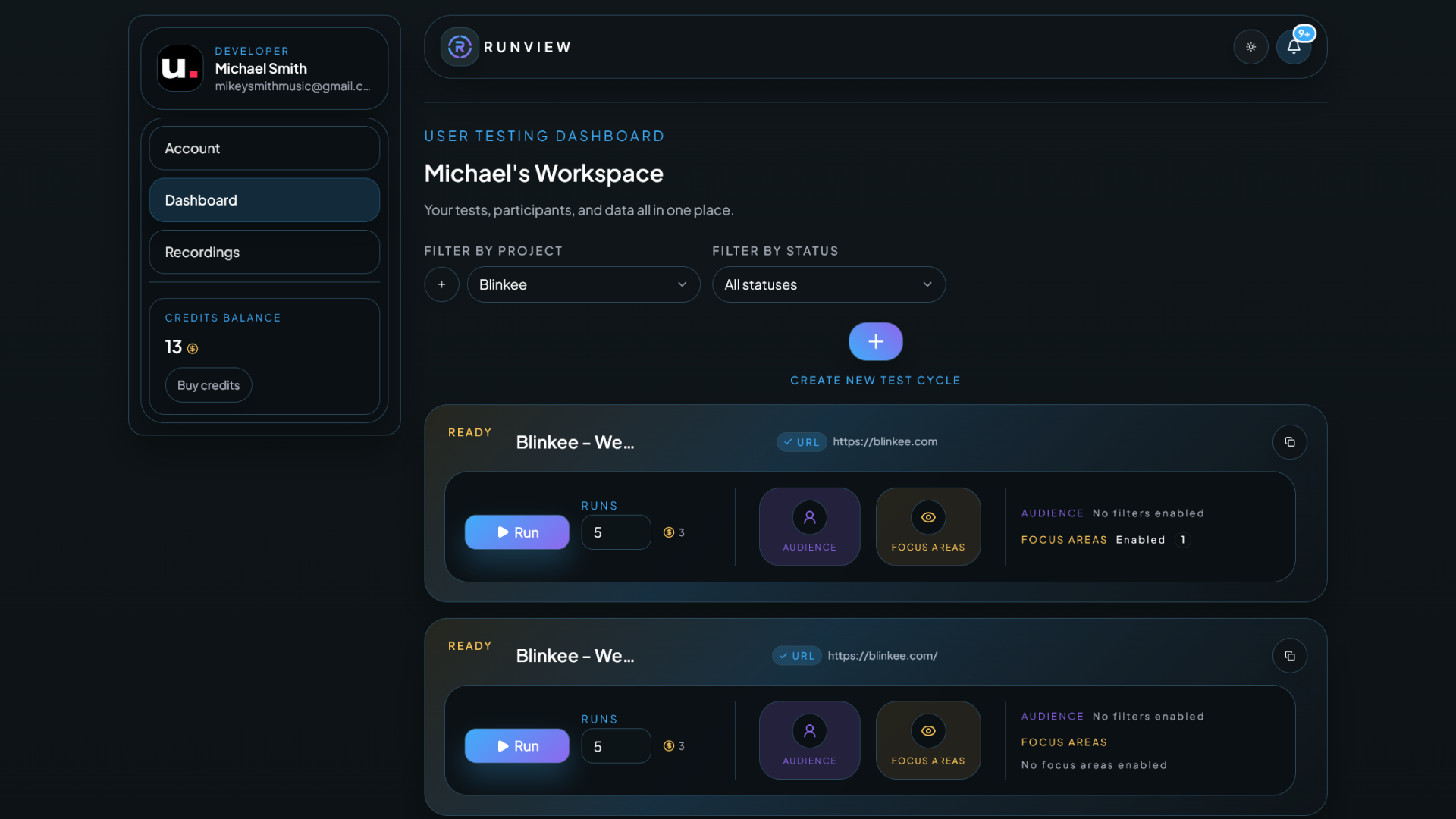
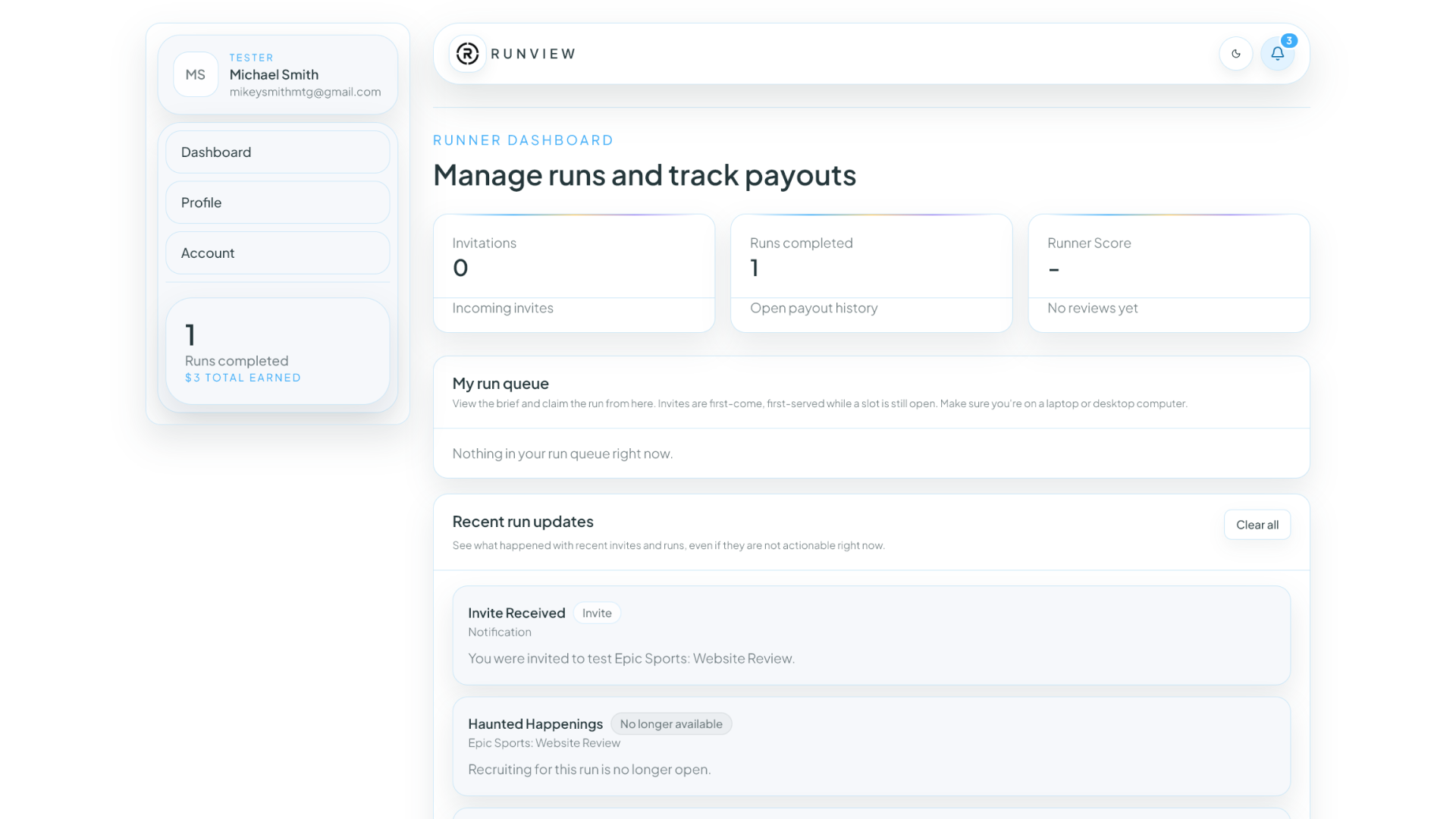
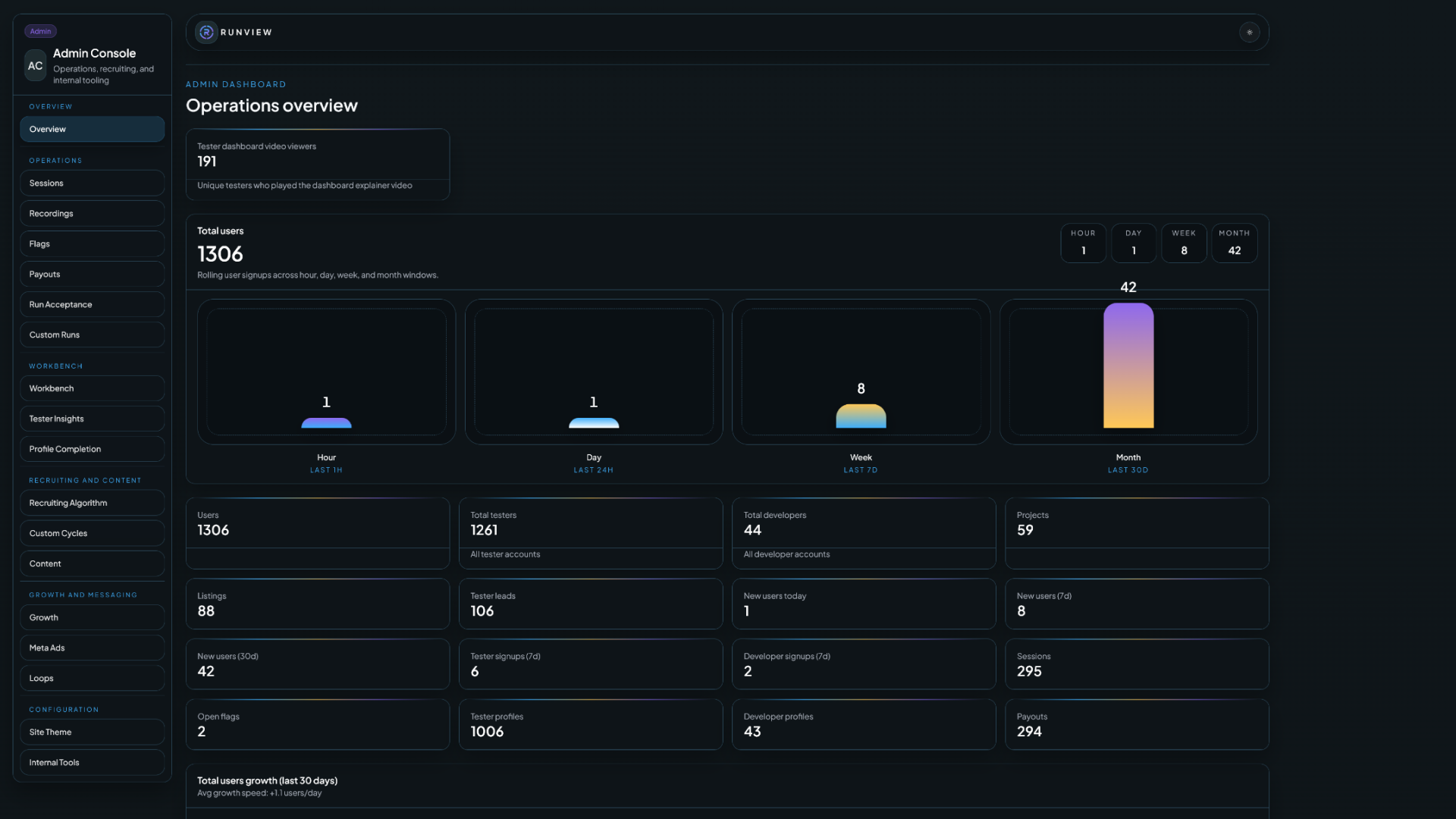
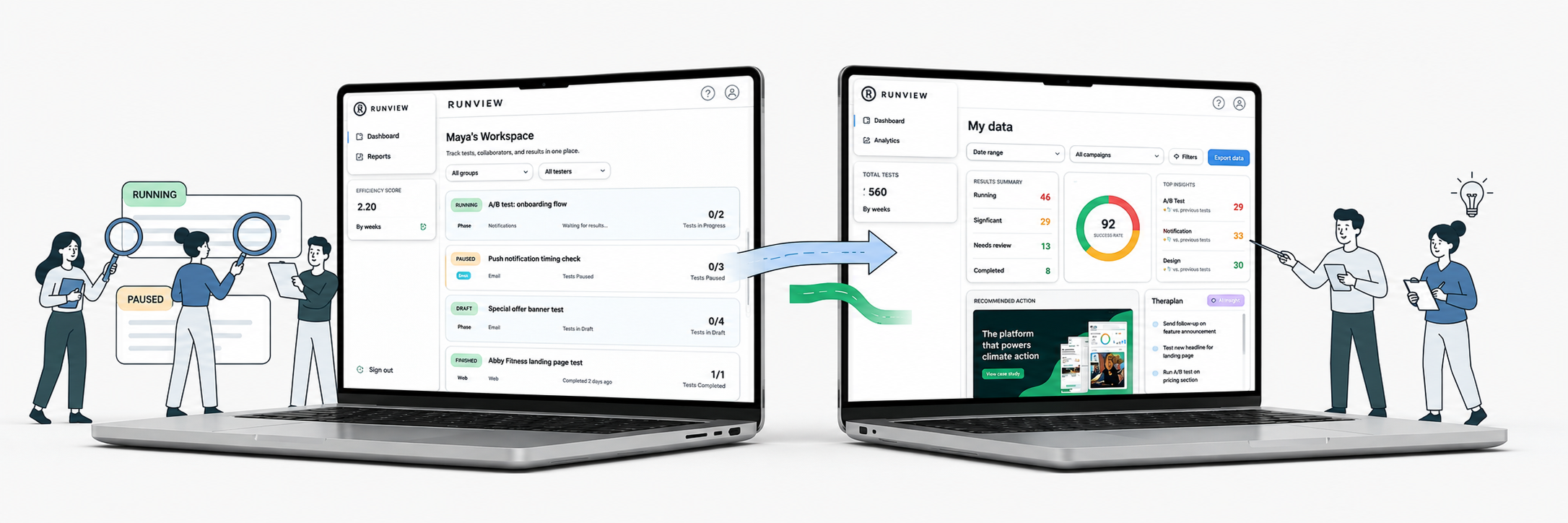
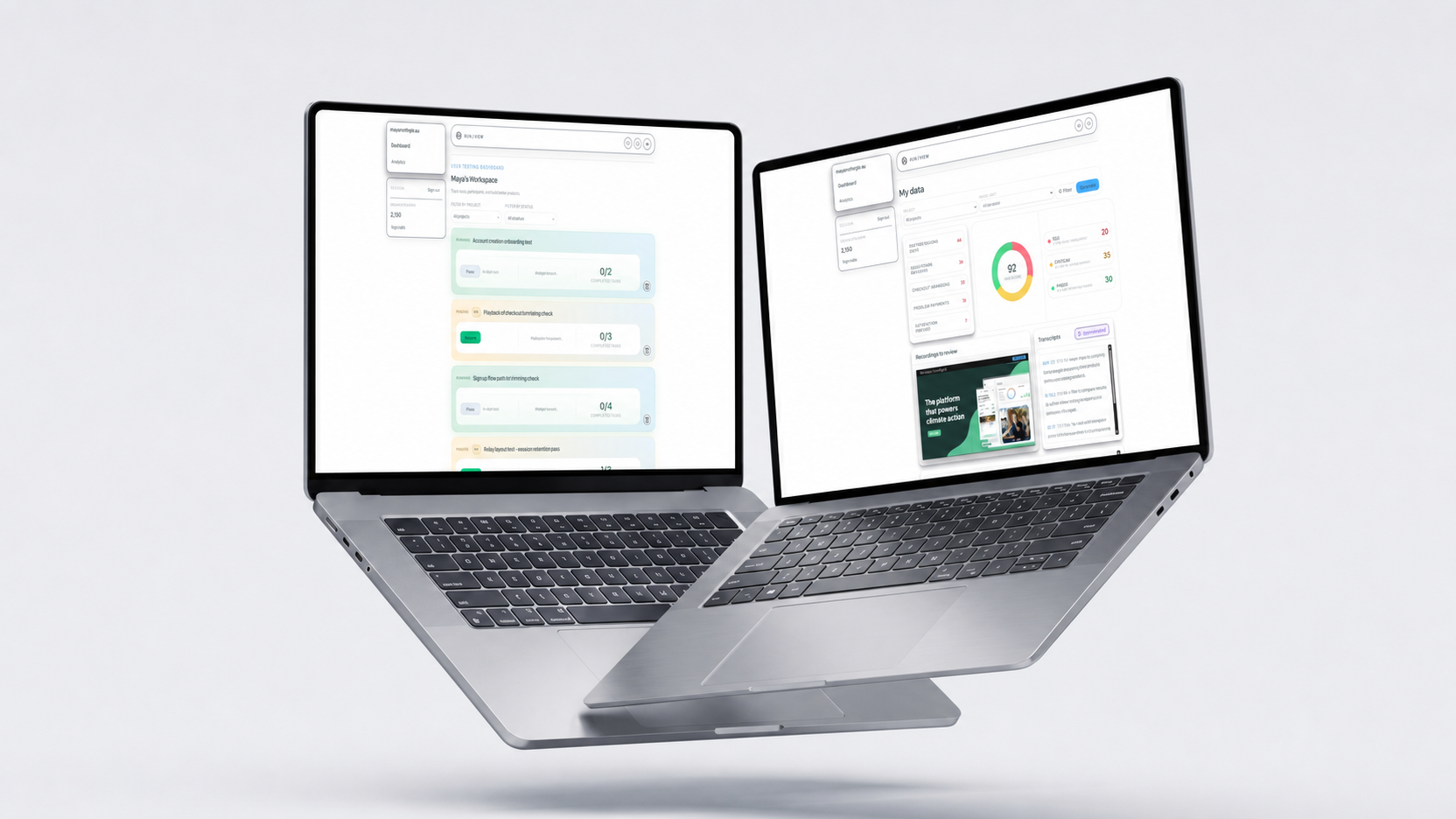
Runview brings three connected experiences into one platform: developers create and launch tests, choose the right audience, and review recorded feedback and results; testers build a profile, receive relevant paid opportunities, complete guided sessions, and track their earnings; and administrators oversee recruitment, users, sessions, payments, payouts, and platform performance from a central operations dashboard.
01 / DEVELOPER DASHBOARD
02 / TESTER DASHBOARD
03 / OPERATIONS DASHBOARD
03 / IDENTITY SYSTEM

Branding & Design System

A flexible identity and interface system connecting developers, paid testers and operations teams.
TYPE SYSTEM

Aa

PLUS JAKARTA SANS
Primary UI / headings / body

Aa

SPACE MONO
Technical labels / system data
CORE PALETTE
SKY
#3EADF9
VIOLET
#8E68EE
SUN
#FFC857
INK
#2B3D41
WHITE
#FFFFFF
04 / CHARACTER + MOTION

Illustration & Animation

Friendly outlined characters turn notifications, live sessions and payment into reusable campaign moments.
▶ RUN RECEIVED
▶ LIVE SESSION
▶ PAID COMPLETION
05 / SYSTEM IN MARKET

Branded content & Marketing

Runview was now a fully-operational SaaS from end to end; everything works, from onboarding to tester recruiting to payments through Stripe. I began the process of marketing the product and building the userbase. I used paid social ads to build the initial tester base, optimizing ad delivery, landing pages, and onboarding until acquiring a new tester user cost an average of $.50. By running a number of paid test runs, I was able to identify where the funnel was breaking or where any workflow points were unclear or confusing and where additional training materials might be helpful. These test runs were also crucial to “vet” tester users – identifying users who own the necessary equipment, respond quickly to run invites, and offer useful, actionable feedback.
▶ EXPLAINER / TESTER EDUCATION
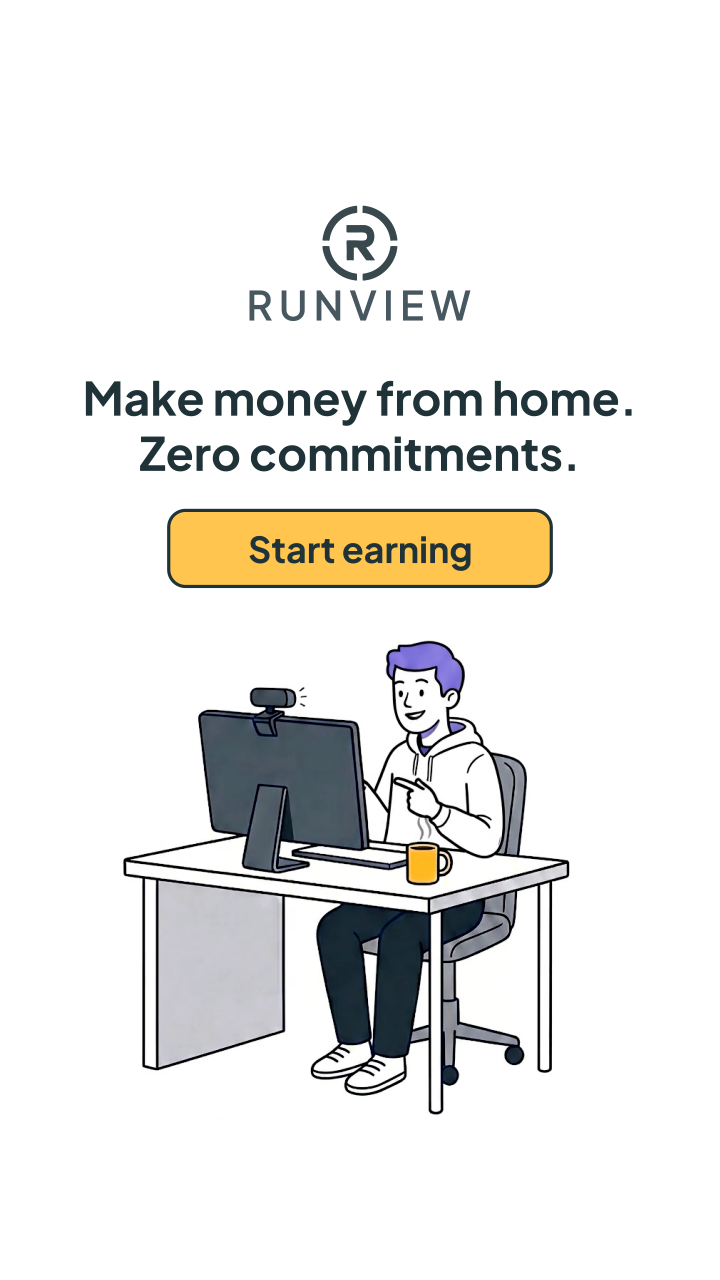
▶ PAID SOCIAL / DEVELOPERS
▶ PAID SOCIAL / TESTERS
PAID SOCIAL / TESTERS
06 / CONCLUSION

From working prototype to profitability

Runview currently has over 1,000 verified tester users in the database, and the tester base is now growing organically at a rate of about 15 new users per month. The system is fully-functional – a paid user can submit a URL for a website, app, or game, define their test audience by demographic, and receive 3-minute videos of real people using their product, with synced screen-capture and webcam facial capture and audio. Time will tell if enough demand exists for a product like Runview to turn the corner into profitability, but given the exploding popularity of agentic-coding and the rapidly growing number of SaaS apps, e-commerce, and vibe-coded apps and websites, all of which would greatly benefit from frequent user testing, I feel confident in the viability of Runview as a successful commercial product. The site is live at www.runview.io.
DESIGNER / DIRECTOR / CREATIVE TECHNOLOGIST
AVAILABLE FOR SELECT SENIOR ROLES